

Why Free Isn't Cheap: The Real Power of Giving First
Mar 24, 2026Why 'Free' Has a Reputation Problem
Let's talk about something that, in my experience, trips up a lot of very talented professionals.
The word FREE.
I know what you might be thinking. "Peter, if I give things away for free, people won't value them. They'll assume my work isn't worth paying for. I'll attract tyre-kickers and time-wasters."
I've heard that concern many, many times over my 30 years in business development. And I understand where it comes from.
But here's the thing. When free is done well, it is one of the most powerful tools in your entire business toolkit. Not a sign of desperation. Not a discount. Not a devaluation of your work.
A strategic, deliberate, carefully structured demonstration of the value you deliver.
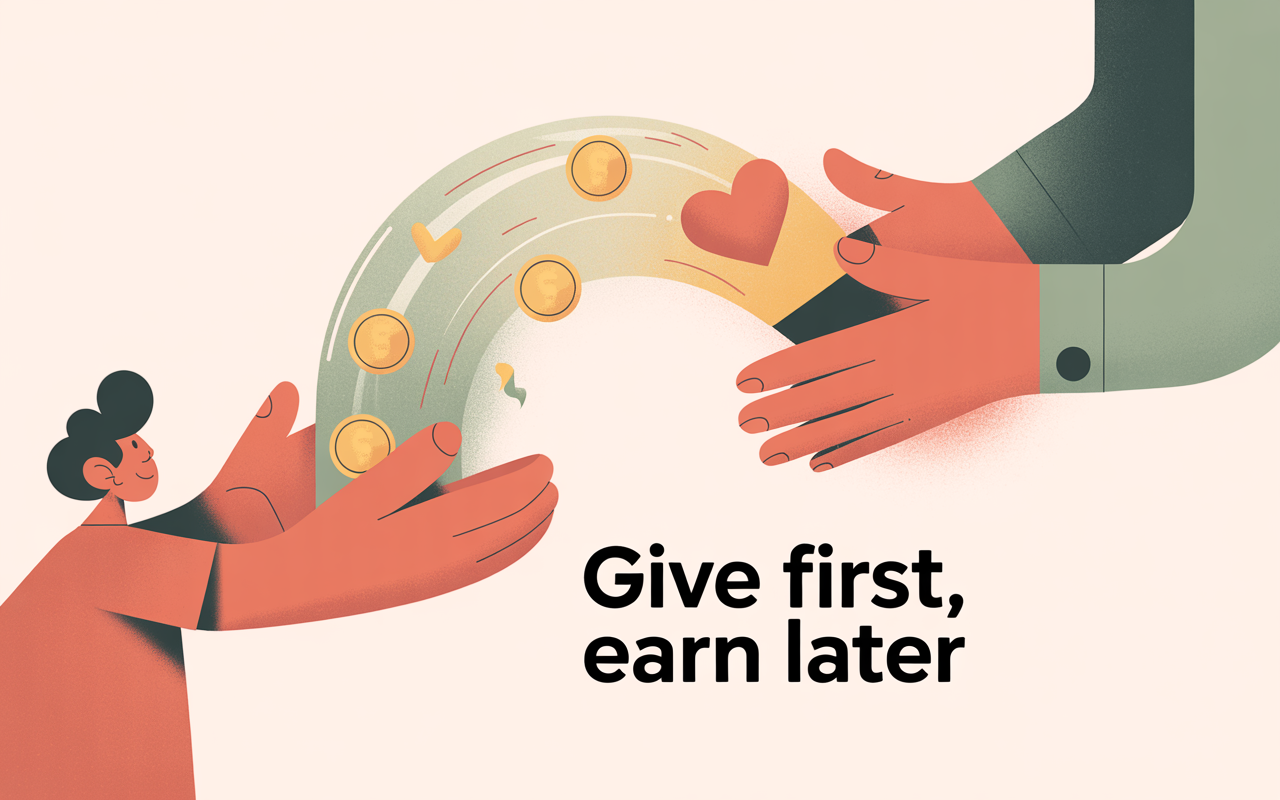
In this article, I want to show you exactly why free isn't cheap and how to structure it so it leads to real, sustainable business growth.
A Real-World Example: How One Coach Turned Free Into Five-Figure Revenue
Let me share a story with you. A coach I know, I'll call her Sarah, decided to offer a free 30-minute consultation on her website.
On the surface, it looked like she was giving away her most precious asset: her time.
And at first, she wasn't sure it was working. A handful of people booked. A few didn't show up. One or two said thanks and disappeared.
But then something interesting started to happen.
A significant number of those consultation callers went on to become paying clients. And not just any clients, but committed, long-term ones who rarely questioned her fees.
Why?
Because that free session wasn't just a giveaway. It was a live demonstration of her thinking, her approach, her expertise, and the experience a client would have working with her.
Her free offer had become a profitable sales tool.
Now, I've seen this pattern play out hundreds of times. In my own business, and in the businesses of coaches, consultants, speakers, trainers and accountants I've worked with. And the results are almost always the same.
Give first, strategically and generously, and the right people will want more.
The Psychology Behind Giving First
I like to think of building client relationships a bit like dating before marriage.
Would you commit to a long-term, expensive partnership with someone you'd never met? Someone whose ideas you hadn't tested? Whose judgment you'd never seen in action?
Of course not.
Business works in exactly the same way. Your potential clients need to know you, like you, and trust you before they'll invest in what you offer. And giving something of genuine value upfront is one of the fastest ways to build that trust.
There's something else at work here too. Research consistently shows that when people receive something valuable, they feel a natural inclination to give something back. It's a deeply human response.
When you deliver a genuinely useful free resource, a consultation, a webinar, a PDF guide, a checklist, you're not just filling someone's inbox. You're creating the conditions for reciprocity.
And reciprocity, over time, turns into revenue.
Always Attach a Value to What You Give Away
Here's a point I feel very strongly about, and it's one a lot of people miss.
Whenever you offer something for free, you must put a clear price or value on it.
If you don't, you're sending a subtle message that it was always free. That it has no real worth. And that, in turn, suggests that you have no real worth.
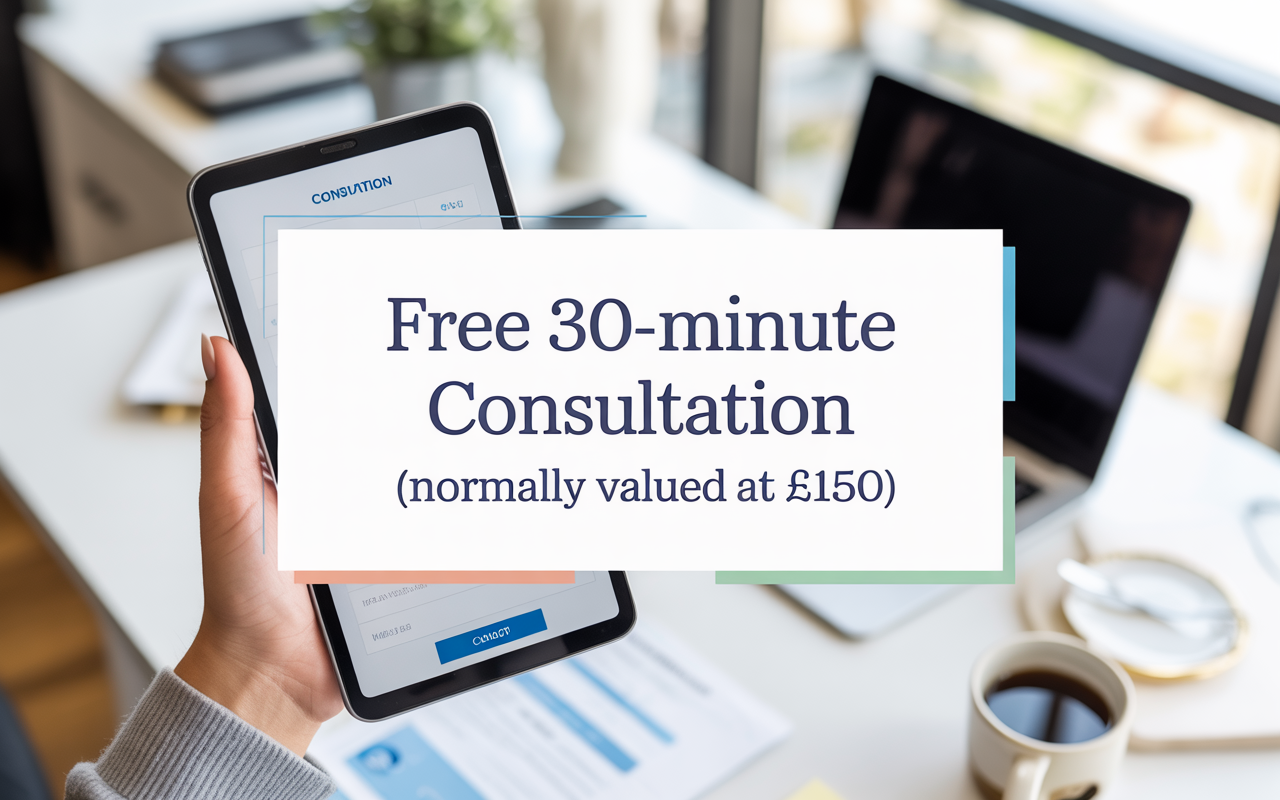
"Free 30-minute consultation" is fine.
"Free 30-minute consultation (normally valued at £150)" is far better.
That simple addition changes the entire frame. Now you're not just giving something away. You're making a generous, high-value offer. And the person receiving it feels accordingly.
A Simple Three-Step Framework for Structuring Your Free Offer
So how do you structure your free offer so it actually leads to business, rather than just taking up your time and energy?
The key is alignment. Your free offer must be strategically connected to your paid products and services. Here's the framework I use and teach.
Step 1: Start Small. Give a Slice, Not the Whole Pie.
Your free offer should solve a small but real and relevant problem for your ideal client. A free ebook. A short webinar. A checklist. A mini-audit. A taster session.
The goal is to demonstrate your expertise clearly while leaving plenty of room for the deeper, paid work that follows.
You're not trying to give everything away. You're giving enough to show what's possible.
Step 2: Create a Logical Next Step.
After delivering your free value, make it completely clear how someone can move forward with you.
If you offer a free audit, follow it with a more detailed paid strategy session. If you run a free webinar, make a well-priced offer at the end. If you share a free PDF, include an invitation to the next level of support.
There should always be a clear, obvious, and well-positioned next step. Without that, you're leaving money on the table and leaving your prospective clients without direction.
Step 3: Show Value, Not Cheapness.
Your free content must reflect exactly the same standard as your paid work. The same quality of thinking. The same level of care. The same clarity and depth.
If your freebie feels rushed, generic, or half-hearted, people will assume your paid work is the same.
On the other hand, when your free offer genuinely surprises people with its quality, they think: if this is what they give away for nothing, imagine what you get when you pay.
That's the thought you're aiming for.
Teach What vs Teach How: The Distinction That Changes Everything
Over my career, I've developed what I consider to be one of my most important principles. It goes like this:
"Teach people what and you'll get paid. Teach people how and you'll get wealthy."
I know this to be true, not just from my own experience, but from the results my clients achieve when they put it into practice.
When you give away the what, you're interesting. When you give away the how, you're indispensable.
And here's the beauty of it. You can give away a tremendous amount of the how in your free content, and still have people queuing to work with you. Because your clients want the transformation that working with you directly brings. They want your specific application of these ideas to their specific situation. They want your eyes on their business, your brain on their problems.
That's not something a PDF can fully replicate.
Take online courses as an example. Many educators offer the first module completely free. It's a taste of the full experience. Done well, it whets the appetite rather than satisfying it. People realise the value available and want to continue.
The same principle applies to a high-value PDF or detailed checklist offered in exchange for an email address. You're building your audience while giving a genuine preview of how you think.
The Fear of Giving Too Much
I want to address the concern I hear most often: "Peter, what if I give too much away and people just take the free stuff without ever paying?"
It's a fair question.
Here's my honest answer. Yes, some people will take your free content and never buy anything. But those people are not your ideal clients. They were never going to invest in working with you regardless of what you did or didn't give away.
The people who are genuinely serious about solving their problems will always want more than a free resource can provide.
They want the application. The accountability. The ongoing relationship. The results.
Your job is to attract those people, and a well-constructed free offer is one of the most effective ways to do exactly that.
The Real Danger You Need to Avoid
Here's something I've learned the hard way, and I want to save you from making the same mistake.
The real risk with free content isn't giving too much.
It's giving something that's not sufficiently aligned with your core paid offer.
Years ago, I ran a 90-minute masterclass on a topic that was genuinely useful and well-received. The people who attended enjoyed it. But because the topic wasn't tightly connected to my main paid programmes, the conversion rate was disappointing.
The free offer was attracting the wrong audience.
It was a good lesson. When you give something away that speaks to a problem your ideal client doesn't have, or creates a promise your paid offer doesn't fulfil, you're not building a pipeline. You're building a dead end.
The free offer and the paid offer must be part of the same story. One must lead naturally and logically to the other.
How the Smartest Brands Use This Strategy
You don't have to look far to see this principle in action at scale.
Take HubSpot. They offer a suite of free tools that solve real, immediate problems for their users. Those tools are useful in their own right. But they sit inside an ecosystem that naturally leads to paid services. The free tools don't replace the paid ones. They point towards them.
For those of us in the coaching and consulting space, the same logic applies on a more personal scale.
Think about an accountant who offers a free tax checklist before the self-assessment deadline. It's relevant. It's timely. It solves a real problem. It demonstrates expertise. And it builds the kind of trust that leads naturally to paid work.
Or a business coach who shares a concise, genuinely useful guide to pricing their services. Relevant, specific, and directly connected to what they help their clients achieve.
This is not complicated. But it does require thought. The best free offers feel obvious in hindsight. They feel like a natural opening chapter to the story your paid offer completes.
What to Do Next
Let me bring this together for you.
Free isn't cheap. Free, when done with intention and strategy, is one of the most powerful mechanisms for building trust, attracting the right clients, and creating a steady, sustainable income.
Here's what to keep in mind:
- Always put a value on what you give away. If you don't value it, neither will they.
- Make your free offer a genuine slice of your best thinking. Not a watered-down version.
- Align your free offer directly with your paid products and services. One must lead to the other.
- Always have a clear, logical next step for people who want more.
- Teach how, not just what. That's where the real value, and the real income, lives.
Once people experience what you can do through a well-crafted free offer, the question is no longer "should I work with this person?" It's "how quickly can I get started?"
And that, you and I know, is exactly where we want them to be.
If you found this useful, you might also enjoy: The Persuasion Formula: Triple Your Yes-Rate and Charge Premium Fees With Confidence - Without Sounding Pushy or Salesy
Want to Put These Ideas Into Practice?
Join The Paid Up Club. It's completely FREE.
Inside, you'll find practical strategies, tools, and a community of coaches, consultants, speakers, trainers and accountants all working towards the same goal: being rightfully rewarded for the value they deliver.
Click here to join The Paid Up Club on Skool: www.skool.com/the-paid-up-club
Stay connected with bite-size videos and updates!
Gain an unfair advantage and join fellow achievers who receive tgiMondays - FREE weekly bite-sized videos and blogs on business and personal growth and inspiration from my latest off the edge thinking and ideas.
We hate SPAM. We will never sell your information, for any reason.
