

How to Double Your Fees Using Value Pricing (Without Losing the Clients You Love)
Aug 25, 2026In this article
- Step 1: Fix the Belief Before the Price
- Step 2: Reposition the Shelf Your Fee Sits On
- Step 3: Rebuild the Offering, Not Just the Number
- Step 4: Install Contrast Into Every Conversation
- Step 5: Test Like a Marketer
- Step 6: Let the Higher Fee Do Its Quiet Work
- What If Someone Says No?
- The 90-Day Doubling Plan
- Begin Today
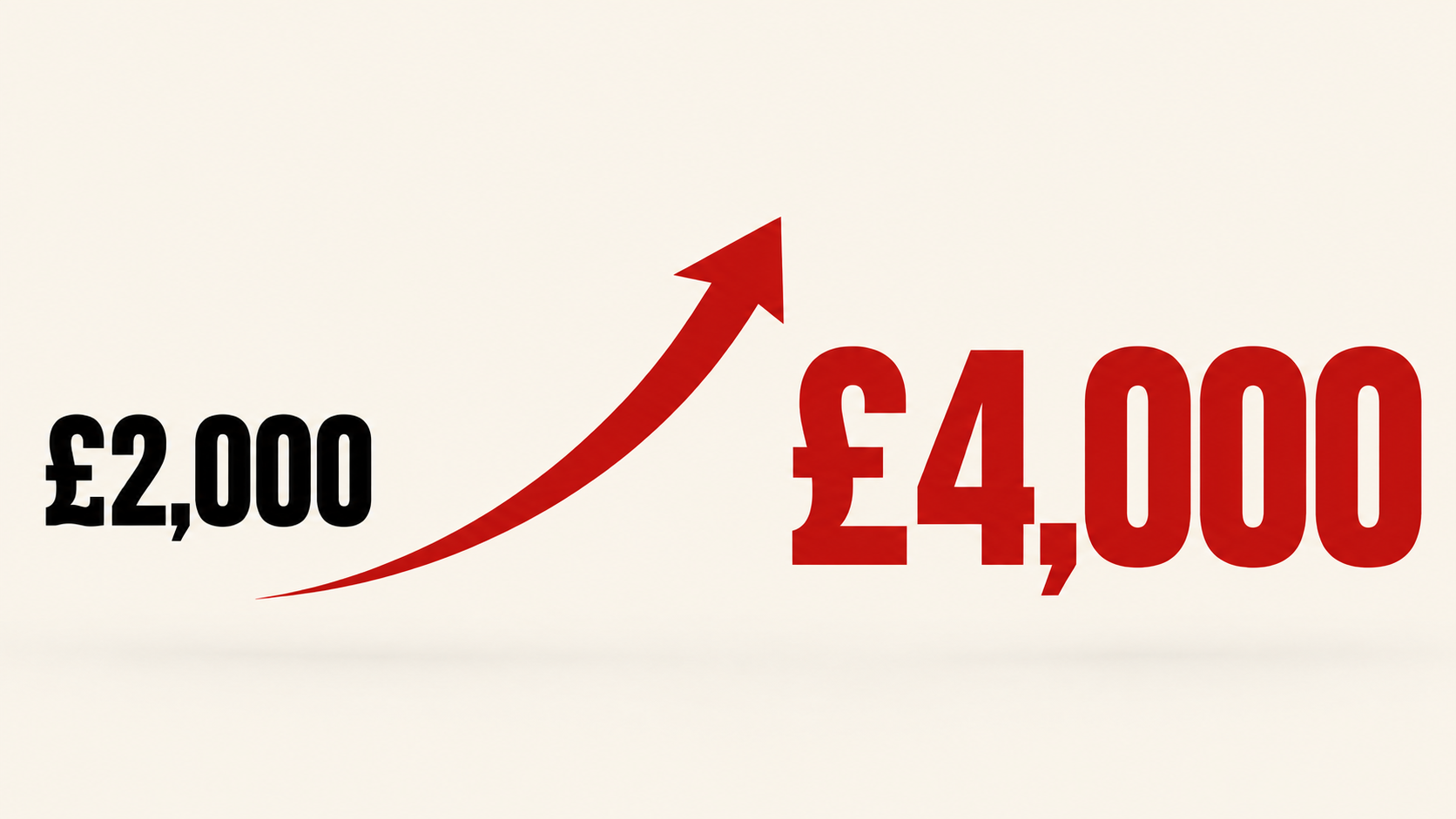
Double your fees.
Go on. Say it out loud.
Now notice what happens.
For many consultants, coaches and fellow professionals, those three words trigger an immediate rush of objections.
“My clients would never pay that.”
“My market is different.”
“Surely I’d lose business.”
And perhaps the most revealing one of all:
“Who am I to charge that?”
Yet I’ve watched consultants, coaches and trainers double their fees — and sometimes increase them considerably more — without losing the clients they most enjoy working with.
I’ve done it myself. More than once.
The first time I seriously tested a higher fee, I quoted 2.5 times my previous rate.
The client accepted it on the spot.
That moment taught me something important.
Very often, the biggest barrier to charging more isn’t sitting across the table from us.
It’s sitting inside our own heads.
So in this article, I’m going to give you a practical six-step plan for moving your fee from where it is now to somewhere much closer to where it deserves to be.
Step 1: Fix the Belief Before the Price
Here’s the sentence this whole article rests on:
You will never get paid more than you truly believe you are worth.
Peter Thomson
Change the price without changing the belief and the doubt has a habit of leaking out.
It appears in the hesitation before you quote the number.
The unnecessary explanation afterwards.
The discount nobody asked for.
The nervous little phrase: “But of course, we can probably do something on that…”
Your words may be saying one thing while everything else is saying another.
So before changing the number, gather evidence.
Look at your last five successful clients and write down the value your work created.
Not just what you did.
What changed because you did it?
Did revenue increase?
Did costs fall?
Did time get saved?
Did confidence increase?
Did a problem disappear?
Did an opportunity become possible?
Then ask one of my favourite questions:
What’s the value of the value?
If your client made another £100,000, what did that £100,000 allow them to do?
Hire someone?
Spend more time with their family?
Sleep more easily?
Invest in another project?
Feel more secure?
Become more significant in their marketplace?
That’s where the real value often lives.
Now use what I call the Advice-Giving Effect.
Imagine someone exactly like you — same experience, same expertise, same results — came to you and asked:
“What should I charge?”
What would you tell them?
Interesting, isn’t it?
We can often see somebody else’s value far more clearly than we see our own.
And when your belief wobbles, remember Be, Do, Have.
Long-term change happens at the identity level.
You’re not a low-fee professional desperately trying to charge high fees.
You’re a high-value professional allowing your fees to catch up with the value you already create.
That’s a very different place from which to have the conversation.
Step 2: Reposition the Shelf Your Fee Sits On
Imagine the same beautiful silver tray.
Put it on a blanket at a car boot sale and it commands one price.
Place it in a department store and it commands another.
Put it under perfect lighting in Harrods and suddenly the expectations change again.
Same tray. Different shelf.
The shelf is part of the perceived value.
And in professional services, you are the shelf.
Your positioning, reputation, authority, proof and presentation all influence the price a prospective client expects to pay.
So before you double your fee, strengthen the shelf it sits on:
- Author status. Nothing establishes author-ity quite like being an author. A book, report, guide or even a useful tips booklet bearing your name changes how prospects meet you before the first conversation begins.
- Proof. Gather testimonials containing names, places, specifics and measurable outcomes. Turn your best results into short case studies.
- Focus. “In my private practice, I work with a small number of major clients at any one time.” Honest scarcity can be wonderful positioning.
- Consistency. Wherever a prospect encounters you — your website, LinkedIn profile, book, videos, emails or conversations — they should meet the same expert, making the same clear promise.
The aim isn’t to look expensive.
It’s to make the higher fee feel congruent with everything the client has already experienced.
Harrods doesn’t apologise for its prices.
Once the shelf is right, neither should you.
Step 3: Rebuild the Offering, Not Just the Number
Here’s where many fee increases go wrong.
Same service.
Same description.
Same delivery.
Bigger number.
No explanation.
Then everybody wonders why the client resists.
Instead of simply doubling the price of the old thing, build the thing the new price deserves.
Start by defining your offering properly:
What it is.
What it has.
What it does.
And crucially:
Why you deliver it this way.
That final question is surprisingly powerful because most professionals never explain the thinking behind the way their service is structured.
Then consider different levels using the Step-Up Model:
Information.
Information plus advice.
Done-with-you.
Done-for-you.
You might also create a Deluxe and Double Deluxe version of your core service, offering greater access, faster implementation, deeper support or additional resources.
Something interesting happens when clients are given meaningful choices.
Your previous fee can become the entry point rather than the ceiling.
And some clients will deliberately choose the highest level simply because they want the speed, attention, certainty or completeness it provides.
Some people want the best available.
Let them buy it.
A packaging truth
It is far easier to double your fee inside a new, richer offering than to double the price of an unchanged one.
Give the new number a new home.
Step 4: Install Contrast Into Every Conversation
A doubled fee presented in isolation can sound enormous.
The same fee presented beside the true economic value of solving the problem can look remarkably sensible.
That is the Contrast Principle at work.
So before discussing your fee, have the value conversation.
Ask:
What is this situation costing each month?
How long has it been happening?
What happens if nothing changes?
What would solving it be worth?
And then once again:
What’s the value of the value?
I once had a client acknowledge during a conversation that the problem we were discussing was worth approximately £14.4 million.
Once that number was clear, something fascinating happened.
My fee stopped being the headline.
The problem became the headline.
That’s the purpose of the value conversation.
Not to manipulate the client into paying more.
To make sure both parties are looking at the economic reality of the decision before discussing the investment required to change it.
Step 5: Test Like a Marketer
Now we come to the step that makes this whole process much safer.
Don’t simply announce a doubled fee to the world. Test it.
In direct marketing, the version currently producing the best result is called the control.
We test challengers against the control.
If the challenger wins, it becomes the new control.
Then we test again.
Your fees deserve exactly the same discipline.
- Test with new enquiries first. There’s no previous pricing history to manage, so you get cleaner evidence.
- Move in stages if you prefer. Try 1.5 times your current fee, then twice your fee. My 2.5-times test taught me that the ladder is often shorter than our fears suggest.
- Hold your nerve when you quote. State the fee warmly, clearly and confidently. Then stop talking. Silence is not your enemy.
- Record what actually happens. Fear makes predictions. Evidence gives you facts.
And here’s something else worth noticing.
Testing higher fees becomes considerably easier when there’s another qualified enquiry coming along behind the current one.
When your pipeline is empty, every prospect feels precious.
When your lead flow is healthy, you can make commercial decisions with much greater confidence.
So build your lead flow at the same time as you build your fees.
That combination changes everything.
Step 6: Let the Higher Fee Do Its Quiet Work
Here’s something almost nobody tells you about increasing your fees.
Your clients may actually get better results.
Why?
Because meaningful investment creates commitment.
When people have genuine skin in the game, they tend to pay more attention.
They prepare.
They implement.
They make decisions.
They use what they’ve bought.
And when belief produces action, and action produces results, the client becomes very happy with the investment they made.
Result?
Happiness.
For all concerned.
And something else happens.
You change too.
It’s not simply what the money makes for us.
It’s what the responsibility can make of us.
We step up to the plate.
We prepare more carefully.
We practise.
We pay attention.
We perform.
Charge properly for your work and you naturally feel a greater responsibility to make the experience worthy of the investment.
So the higher fee can create a virtuous circle.
Better commitment.
Better delivery.
Better implementation.
Better results.
What If Someone Says No?
Let’s deal directly with the fear that keeps professional fees frozen for years.
At some point, somebody is going to say no.
And that’s perfectly useful.
A no at double your fee is information, not injury.
It gives you evidence.
Was the value unclear?
Was the contrast strong enough?
Was the offering compelling enough?
Was sufficient proof available?
Did the client genuinely need what you were offering?
Or were they simply a transactional buyer who was always going to make the decision largely on price?
Now consider the arithmetic.
Suppose you currently charge £5,000 and win ten clients.
That’s £50,000.
Double the fee to £10,000 and you need only five clients to produce the same £50,000.
Win six?
That’s £60,000.
So at twice the fee, you can lose anything less than half the clients and still make more revenue — while serving fewer people.
Read that again.
It changes how rejection feels.
And if a client says:
“That’s more than we’d budgeted.”
Don’t automatically discount.
Restructure.
Change the shape of the delivery.
Reduce the number of days.
Adjust the access.
Move them to a different level of the offering.
Change the scope.
But protect the integrity of your rate.
A discount can teach the client that the original fee was flexible.
A restructure demonstrates that the fee is attached to something real.
The professionals who never hear no may simply be the professionals who never test the edge of their value.
The 90-Day Doubling Plan
Let’s put the six steps onto a calendar.
- Days 1 to 14 — Evidence. Document the value you’ve delivered, calculate the value of the value and write down the evidence that supports your new belief.
- Days 15 to 30 — Positioning. Assemble proof, align your profiles, strengthen your authority and start creating an authority piece.
- Days 31 to 45 — Packaging. Define your new offering, create your levels and give the new fee a new home.
- Days 46 to 60 — Conversation. Rehearse your value questions and make sure contrast appears before price.
- Days 61 to 90 — Testing. Quote the new fee to suitable new enquiries. Record the responses. Review the evidence. Adjust what needs adjusting.
And notice what happens as those 90 days unfold.
At the beginning, you may have to believe the higher fee is possible.
Then somebody says yes.
Now you have evidence.
Another person says yes.
More evidence.
Soon you no longer have to manufacture confidence.
Reality is doing it for you.
Ninety days. One decision. A systematic test.
And perhaps a fee that finally respects the difference you make.
Begin Today
For the complete system, including attribution errors, pricing models, the Contrast Principle and the conversations that help clients recognise value, it’s all inside my book, paid!.
Get your copy today at peterthomson.com/paid-book.
Increasing your earnings can feel rather like climbing a mountain.
Standing at the bottom, looking up, the summit can seem a very long way away.
But you don’t climb a mountain in one enormous leap.
You take the next step.
Then the next.
Then one day you look back and realise just how far you’ve travelled.
Perhaps your first step isn’t even doubling your fee.
Perhaps it’s simply deciding that your current fee is no longer the final answer.
You’ve been standing at the bottom long enough.
Shall we climb?
Peter
Stay connected with bite-size videos and updates!
Gain an unfair advantage and join fellow achievers who receive tgiMondays - FREE weekly bite-sized videos and blogs on business and personal growth and inspiration from my latest off the edge thinking and ideas.
We hate SPAM. We will never sell your information, for any reason.
