

The Forgotten First 90 Days: How to Start Client Relationships That Last
Apr 30, 2026The Gap Nobody Talks About
Here is something I have noticed across my many years of working with coaches, consultants, speakers, trainers and accountants.
Most of the conversation in our industry is about winning clients. The pitch. The proposal. The close. The follow-up. How to get someone to say yes.
And all of that matters enormously.
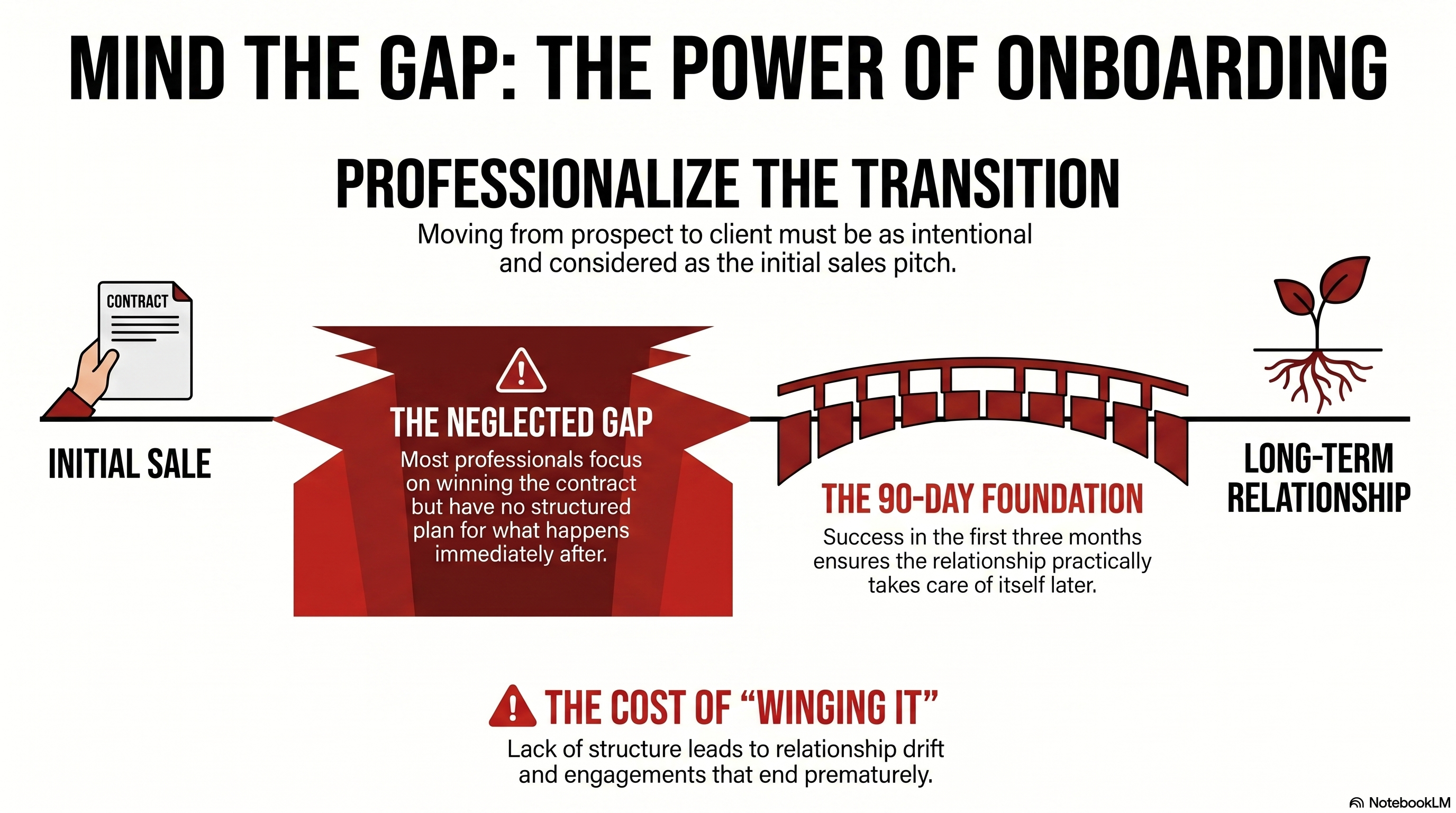
But there is a gap that almost nobody talks about. And it begins the moment the contract is signed.
What happens next? How do you actually begin the relationship in a way that sets it up for long-term success? How do you make the transition from prospect to client feel as professional and considered as everything that came before it?
In my experience, very few professionals have a structured answer to those questions. They wing it. And the cost of winging it is not always immediate. It shows up months later, in a client who drifts away, a relationship that never quite finds its rhythm, or an engagement that ends before it should have.
The first 90 days of a client relationship set the foundation for everything that follows. Get them right and the relationship practically takes care of itself. Get them wrong and no amount of great work will fully recover it.
Most professionals focus intently on winning new clients, but give far less thought to what happens after the contract is signed.
Why the First 90 Days Matter More Than You Think
Think about any important relationship in your life. The early period sets the tone. Patterns are established. Expectations are formed. Trust is either built or it is not.
Client relationships are exactly the same.
The first 90 days are when the client decides, largely below the level of conscious thought, whether they made the right decision in hiring you. They are looking for evidence that you are who you said you were. That you deliver what you promised. That working with you feels the way they hoped it would.
When you approach those 90 days with structure and intention, you give the client that evidence consistently. And when you do not, you leave it to chance.
The structured approach I am going to share with you has been developed and refined over many years of client work. It works. And it works because it treats the beginning of the client relationship with the same care and professionalism that you put into winning it in the first place.
Setting the Stage: The Welcome Pack
Before your first proper working meeting, I recommend sending a welcome pack.
I want to be clear about what this is and what it is not. It is not a folder of documents. It is not administrative paperwork dressed up with a bow on it.
It is your first opportunity, after the contract is signed, to demonstrate your professionalism and attention to detail. And it tells the client something important: that the quality of their experience working with you begins now, not at the first meeting.
Here is what I suggest including:
- A personalised welcome letter. Not a template. A letter that reflects the specific client, what they are working on, and why you are looking forward to working with them.
- Your working agreement in plain English. The formal contract is the formal contract. But a plain-English summary of what you are doing together, what the client can expect, and what you expect from them, removes ambiguity and creates confidence.
- A brief questionnaire about their goals and challenges. This does two things. It gives you valuable information before the first meeting. And it signals to the client that their goals are at the centre of the engagement, not your methodology.
- Clear next steps. What happens now? When is the first meeting? What should they prepare, if anything? Give them a clear picture of what comes next.
This pack takes time to prepare. That is the point. It is a signal that you are the kind of professional who thinks carefully about the experience they create for clients.

The First Meeting: Hard Contract and Soft Contract
I must admit I have a tendency to rush into the work. I find myself in the first meeting with a client, already knowing what I want to suggest, already keen to get going.
But I have learned, sometimes the hard way, that the first meeting is not the moment to launch into the work itself. It is the moment to set the tone for the entire relationship.
There is a distinction I find very useful here. I call it the hard contract and the soft contract.
The hard contract is what you are doing together. The scope, the deliverables, the timeline. You have probably already covered most of this in the proposal stage.
The soft contract is how you are going to do it. And this is what most professionals skip entirely.
The soft contract conversations cover:
- What does success look like? Not in vague terms. Specifically. What will be different at the end of this engagement that is not different now?
- How will you communicate? What is the preferred channel? How quickly should messages be responded to? Is there a standing call or meeting?
- What does the client expect from you? And equally, what do you expect from them? Their time, their access, their willingness to implement.
- What might get in the way? This is often the most valuable question of all. What are the foreseeable obstacles? What has derailed similar efforts in the past?
Getting this clear in the first meeting prevents misunderstandings later. And it creates a shared picture of success that both parties can refer back to throughout the engagement.
The hard contract is what you are doing. The soft contract is how you are going to do it. Most professionals skip the soft contract entirely.
Create Shared Objectives in 30-Day Segments
Once expectations are clear, work together to establish measurable goals for the first 90 days.
I suggest breaking these into three 30-day segments. This is not just an administrative preference. It is a practical one.
When the full 90 days feels like one long stretch, progress can become invisible. Clients and professionals alike lose a sense of momentum. But when each month has its own clear objectives, progress becomes visible and manageable. There are natural moments to celebrate wins, reassess priorities, and adjust the approach.
The key word here is shared. These objectives should not be handed down to the client as a plan. They should be created together. When a client has helped to set the objectives, they have a stake in achieving them. That changes how they engage with the work.
The Successful Working Framework
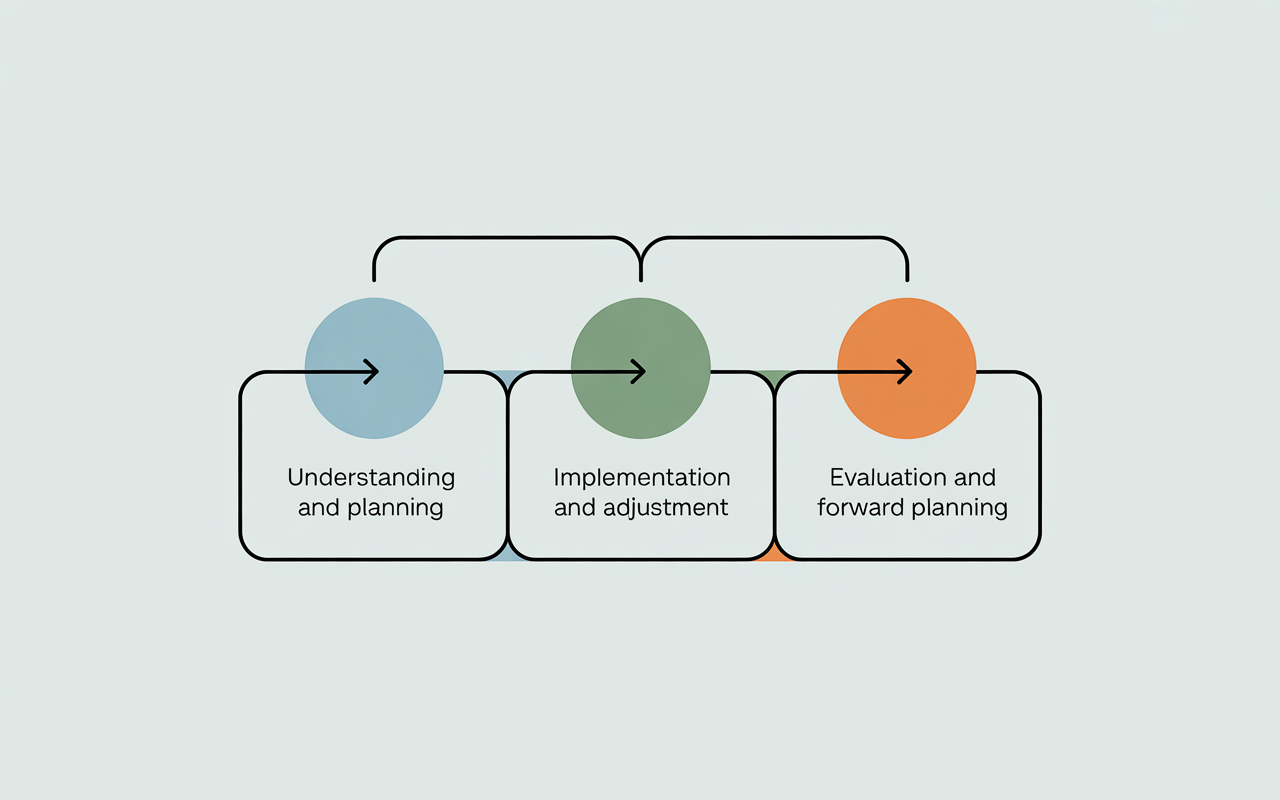
Across the 90 days, I structure the work into three phases.
The first is understanding and planning. This is where I look carefully at the client's current situation. I identify quick wins to build confidence early. I create detailed action plans and set up the measurement systems that will allow us to track progress meaningfully.
The second is implementation and adjustment. This is where the agreed plans begin to be executed. I hold regular progress reviews, make necessary adjustments, and document early successes. This last point matters more than people expect, and I will come back to it.
The third is evaluation and forward planning. This covers measuring progress against the initial goals, gathering feedback from everyone involved, planning the next phase of the engagement, and identifying long-term opportunities. For corporate clients, this is also the moment to consider what internal referrals the relationship might be able to trigger.
Document Everything, Especially the Wins
This is one of the most underrated practices in client work, and one I feel strongly about.
Clients can forget just how much you have done for them.
This is not a criticism. It is simply human nature. People are focused on the present. The challenges they faced six months ago feel distant. The situation before you got involved is already hard to remember clearly.
When you keep a detailed record of the successes you have achieved together, the decisions that were made, the problems that were solved, and where appropriate the financial impact of those outcomes, you are creating something invaluable.
That record is what reminds the client over time of the difference your relationship has made. It is what makes renewal conversations easy. It is what generates referrals. And it is what protects the relationship if there is ever a difficult moment.
My recommendation is to document this consistently throughout the engagement, not just at review points. A short note after every significant outcome, every major decision, every measurable result, takes very little time and pays dividends over and over.
Clients can forget just how much you have done for them. The record you keep is what reminds them.
Building Trust Through Deliberate Action
One mistake I made early in my career was to assume that trust would build naturally over time.
I have since learned that it does not.
Trust is actively built through consistent, deliberate actions. It does not accumulate passively simply because the work is good. It is built through the accumulation of small proofs that you are exactly who you said you were.
The things that build trust in a client relationship are:
- Doing what you say you will do, when you say you will do it. Every time. Without exception. This sounds obvious and it is. But it is also the thing most commonly cited by clients when they describe why they trust a professional.
- Communicating proactively, not just when there is good news. If something is taking longer than expected, say so before the client asks. If you have spotted a risk, flag it before it becomes a problem.
- Speed stuns. This is a principle I return to often. When you say you will do something, do it quickly. Faster than expected. The contrast between what people expect and what you deliver is where trust is built at pace.
- Admitting mistakes quickly and outlining how you will fix them. A professional who acknowledges an error immediately and has a clear plan to address it builds more trust than one who never makes a mistake. Because everyone knows that is not real.
- Sharing insights and observations regularly. Not just the agreed deliverables. But the observations you make along the way. The things you notice. The ideas that occur to you. This signals that your engagement with the client's situation extends beyond the formal scope.
The Role of Technology in Client Relationships
If many of your client conversations happen on Zoom or similar platforms, there is an opportunity here that most professionals leave untapped.
I strongly recommend using AI assistance to capture a video and audio recording of your meetings, create a transcript, generate a meeting summary, and produce an agreed action points list.
I copy these summaries into my client records, which I keep in GoodNotes on my iPad. Before every subsequent meeting with a client, I spend a few minutes reviewing where we got to, what was agreed, and what has happened since. This means I arrive prepared, every time, without needing to rely on memory alone.
The practical impact of this is significant. Clients notice when you remember exactly what was discussed three months ago. They notice when you refer back to something they said in passing and followed up on it. These are not small things. They are the evidence that you are paying genuine attention.
The 90-Day Review
I strongly recommend holding a formal review at the 90-day mark, and potentially sooner.
This is not just a progress check. It is an opportunity to strengthen the relationship, address anything that has not gone as planned, and make certain you are aligned as you move forward.
Each review should cover:
- Progress against the agreed goals. What has been achieved? What is on track? What needs adjustment?
- What is working well. Be specific. Name the wins. This is not the moment for false modesty.
- What needs adjustment. Be equally honest here. If something is not working, say so and have a clear proposal for how to change it.
- New opportunities. What have you learned about the client's situation that opens up new possibilities? What could you do together that was not on the original plan?
- Next steps and commitments. Leave the review with a clear picture of what happens next, who is responsible for what, and by when.
The 90-day review is also the natural moment to discuss what the next phase looks like. For many engagements, the end of the first 90 days is the ideal time to move into a longer-term arrangement. The client has experienced the quality of the work. Trust has been built. The case for continuing is already made.
Common Pitfalls to Avoid
Let me share the mistakes I see most often, including some I have made myself.
- Rushing in to demonstrate value before properly understanding the situation. I know this one from personal experience. You can see from the first conversation what needs to happen. And the urge to get going is strong. But the understanding stage is not optional. It is the foundation on which everything else rests.
- Not documenting agreements and decisions. Verbal agreements are forgotten. Write them down. Every one of them.
- Failing to manage scope creep early on. When additional requests start to come in, address them explicitly and early. Left unchecked, scope creep creates resentment on both sides.
- Assuming alignment rather than checking regularly. Just because there are no complaints does not mean everything is on track. Check in. Ask directly. Do not wait for the review to surface a problem that has been building for weeks.
Assuming alignment rather than checking regularly is one of the most costly mistakes in client work.
The End is Really the Beginning
The end of the first 90 days is not the end of the process. It is really the beginning.
But by following the structured approach I have outlined here, you will have built something that is genuinely rare: a solid foundation for a long-term, mutually beneficial relationship.
A client relationship is like any other important relationship in life. It needs attention, care and regular maintenance to flourish. The effort you put in during those first 90 days will pay dividends for years to come.
The question is not just: how can I help this client?
It is: how can I build a relationship that allows me to deliver the maximum value over time?
When you focus on building strong foundations, the results tend to take care of themselves.
[IMAGE: Peter Thomson at a meeting or in conversation with a client, representing a strong long-term professional relationship]
Your Next Step
If you found this useful, I want to invite you to come and join us in The Paid Up Club.
It is a free community on Skool for coaches, consultants, speakers, trainers and accountants. We share practical, proven strategies for winning better clients, delivering extraordinary value, and building businesses and lives of real choice.
We go deep on client relationships, communication, fee confidence, and the business development approaches that actually work in the helping industry.
Come and join us. There is no charge and no catch.
Join The Paid Up Club at skool.com/the-paid-up-club-1564
For more on how to position your expertise and build the kind of practice you genuinely want, my book PAID! covers the full system.
Get your copy of PAID! at peterthomson.com/paid
Keywords: first 90 days client relationship, how to start a client engagement, consultant onboarding clients, client relationship management consultants, soft contract hard contract, building trust with clients, client retention for coaches, new client onboarding process, welcome pack for consultants, how to keep clients long term
SEO Title: The Forgotten First 90 Days: How to Start Client Relationships (69 chars)
Meta Description: Most consultants focus on winning clients, not keeping them. Here is the structured 90-day framework that sets every client relationship on the right foot. (158 chars)
Stay connected with bite-size videos and updates!
Gain an unfair advantage and join fellow achievers who receive tgiMondays - FREE weekly bite-sized videos and blogs on business and personal growth and inspiration from my latest off the edge thinking and ideas.
We hate SPAM. We will never sell your information, for any reason.
