

Four Mistakes That Are Killing Your Thought Leadership (And What To Do Instead)
Apr 07, 2026You want to be the recognised authority in your niche. You want people to come to you already half-convinced that you are the right person for the job. You want thought leadership that actually leads.
So do I. And over the years, I have made every one of the mistakes I am about to share with you.
That is what makes them worth talking about.
Whether you are a coach, a consultant, a speaker, a trainer, or an accountant, the same four traps tend to catch people out when they are trying to build their profile and reputation online. I see them every single week. The good news is that each one has a straightforward fix once you can see it clearly.
Let us walk through them together.
Contents
- Mistake One: Too Much Quantity, Not Enough Quality
- Mistake Two: Copying Someone Else's Style Instead of Being Yourself
- Mistake Three: Talking At People Instead of With Them
- Mistake Four: Being Too Salesy in Every Single Message
- The Thought Leadership Formula That Actually Works
- What To Do Next
Mistake One: Too Much Quantity, Not Enough Quality
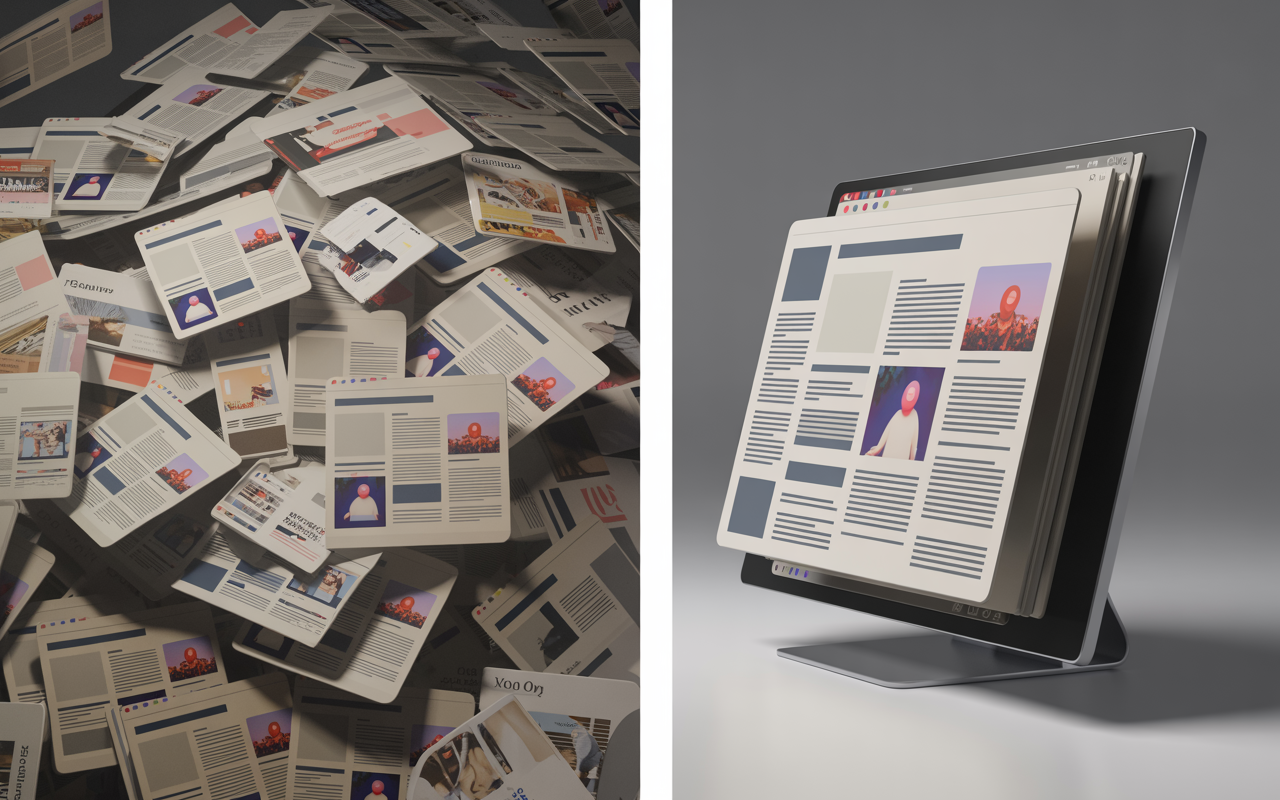
I see this constantly. Many people putting out content every single day. Videos, posts, newsletters, reels. A relentless stream of material that fills the feed but rarely fills anyone with much insight.
Here is the problem. When you prioritise volume over value, your audience starts to tune you out. They stop clicking. They scroll past. They might still follow you, but they are not really listening any more.
And the painful irony is that the person pumping out five pieces of mediocre content a week is actually doing more damage to their reputation than the person who posts nothing at all. At least silence does not actively erode trust.
I personally prefer short, sharp content. A concise video that gets straight to the point. A post that gives you one genuinely useful idea and then stops. I do not always have an hour to give to a single piece of content, and neither does your audience.
|
"If your content is not worth watching twice, it is probably not worth posting once." |
The Fix
Commit to quality first. Ask yourself before you publish: does this genuinely help someone? Does it say something specific and useful, or is it simply filling a slot in a content calendar?
One focused, well-crafted piece of content per week will build your authority faster than seven rushed ones. Your audience will remember the piece that changed the way they thought about something. They will not remember the one you threw together in fifteen minutes because you felt you had to post.
If you want to go deeper on building a content strategy that actually works for your business, take a look at what we cover inside The Paid Up Club.
Join The Paid Up Club community here

Mistake Two: Copying Someone Else's Style Instead of Being Yourself
I have been guilty of this one. We all have. You see someone doing well, you notice how they present themselves, how they structure their content, the phrases they use, the energy they bring, and you think, that works for them so it will work for me.
It will not. Not really. Not sustainably.
Here is what I know after decades in business. Out of seven billion people on this planet, there are plenty who will resonate with you exactly as you are. And there will be plenty who do not. That is simply life.
My late friend Ted Nicholas taught me a word years ago that I have never forgotten. Next. When someone does not connect with your message or your style, the answer is not to change who you are. The answer is next. Move on. The right people are out there and they will find you when you are being authentically yourself.
|
"There will be plenty of people in the world who resonate with me. And a lot who will not. That is life. Next." |
The Fix
Study what others do in your space, by all means. But extract the principles, not the personality. What made their hook effective? What structure did they use? Then take those principles and express them through your own voice, your own stories, your own examples.
The coaches, consultants and speakers who build the strongest reputations are the ones whose audiences feel like they know them. That only happens when the person shows up as themselves.
If you are not yet clear on what your authentic positioning looks like, my book PAID! walks you through exactly how to build that, including how to articulate your value in a way that feels genuinely like you.
Mistake Three: Talking At People Instead of With Them
Thought leadership is not a broadcast. If every single piece of content you put out is a one-way transmission, you are missing half the point.
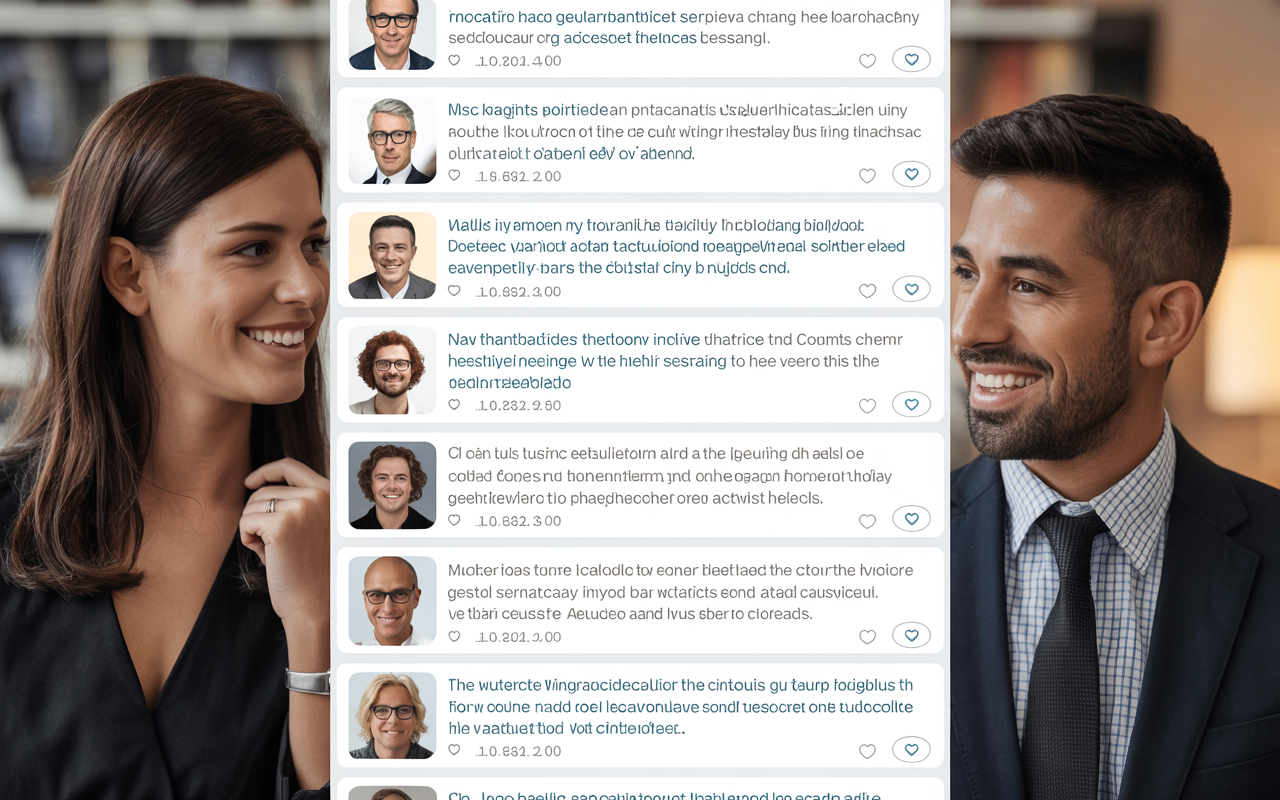
The most powerful thing about having an audience online is the ability to talk with them. To find out what they are struggling with. To ask questions. To respond to what they say. To build a genuine back-and-forth with real people who are interested in what you know.
When all your communication goes one way, you lose something vital. You stop learning what your audience actually needs. You start creating content in a vacuum. And over time, you drift further and further from the problems you are supposed to be solving.
The mechanics are straightforward. Comments sections. Polls. Surveys. Reply to the people who engage with you. Create content that invites a response rather than simply delivering information.
- Ask a specific question at the end of each post.
- Run a simple poll on LinkedIn or in your community to find out what your audience is wrestling with.
- Reply to every comment, especially in the early stages of building your platform.
- Create content that addresses questions you have actually been asked.
That last one is powerful. When someone asks me a question, that question becomes content. Because if one person is asking it, a hundred people are wondering the same thing and not saying anything.
|
"If one person is asking the question, a hundred more are wondering the same thing and staying silent." |
The Fix
Build engagement into every piece of content you create. Not as an afterthought. As part of the design. What do you want people to think, feel or do after they consume this? What question does it leave them with? Give them a reason and a route to respond.
Inside The Paid Up Club, we spend a lot of time on this. How to create content that opens conversations rather than closing them. If that interests you, come and join us.
Find out more about The Paid Up Club
Mistake Four: Being Too Salesy in Every Single Message
This is the one that kills more thought leadership efforts than almost anything else.
You know the pattern. Every video ends with a pitch. Every post has a buy now link. Every newsletter is really just a wrapper for a promotional offer. After a while, your audience starts to anticipate it. They get to the two-thirds mark of your content and they switch off because they know what is coming.
I changed the way I do this a while back. You will notice I no longer end my videos by asking people to hit subscribe. If they want to subscribe, they will. If the content is good enough, they will. The moment I start closing every piece of content with a call to action, I undermine the trust the content was building in the first place.
This does not mean you never make an offer. Of course you do. But the ratio matters enormously. If you are consistently providing genuine value, and occasionally pointing people toward a way to go deeper with you, that feels natural. That feels like a helpful suggestion from someone who knows their subject.
If every message contains a sales message, you stop feeling like an authority and start feeling like a salesperson. And in the helping industry, that is the fastest way to empty your audience.
|
"Stop selling. Start allowing people to buy. There is a profound difference between the two." |
The Fix
Think of a ratio of roughly eight to ten pieces of pure value content for every one piece of promotional content. Some people push this even further. The point is that your audience should feel, most of the time, that you are simply giving them something genuinely useful with no strings attached.
When you do make an offer, make it clear and confident. Not apologetic. Not buried. But not constant either. Position it as the logical next step for someone who has been getting value from your content and wants to go further.
If you are a coach, consultant, speaker, trainer or accountant who wants to build a consistent pipeline of ideal clients without feeling like you are constantly selling, that is precisely what PAID! addresses.
Learn more about PAID! and pick up your copy
The Thought Leadership Formula That Actually Works
Let me bring these four ideas together because on their own each one is useful, but together they form something more powerful.
Real thought leadership in the helping industry is built on four foundations:
- Quality over quantity. One excellent piece of content beats ten average ones every time.
- Authenticity over imitation. Your audience wants you, not your impression of someone you admire.
- Conversation over broadcast. The best content opens a door, it does not close a deal.
- Value over promotion. Lead with what you know. The sales take care of themselves.
When you get these four things right, something interesting happens. You stop feeling like you are chasing clients and start feeling like clients are coming to find you. Your reputation does the work. Your content does the work. And you get to focus on actually helping people, which is why you got into this in the first place.
That shift, from chasing to attracting, is what I have spent most of my working life helping coaches, consultants, speakers, trainers and accountants achieve. It is what PAID! is about. It is what we work on inside The Paid Up Club every single day.
What To Do Next
If you recognise yourself in any of these four mistakes, the most important thing is not to feel bad about it. I have made every single one of them. The point is not to be perfect. The point is to be better than you were last week.
Here is where I would suggest you start.
Take your last ten pieces of content and ask honestly: was each one genuinely useful to someone? Did it sound like you? Did it invite a response? Did it give value without always asking for something back?
If the answer to any of those is no, you now know what to work on next.
And if you would like support, accountability and a community of like-minded professionals working on the same challenges, The Paid Up Club is where that happens.
For even deeper thinking on how to build your authority, attract better clients and charge what you are worth, the PAID! book is the place to start.
Until next time.
Peter Thomson
'The UK's Most Prolific Business Development Author'
Stay connected with bite-size videos and updates!
Gain an unfair advantage and join fellow achievers who receive tgiMondays - FREE weekly bite-sized videos and blogs on business and personal growth and inspiration from my latest off the edge thinking and ideas.
We hate SPAM. We will never sell your information, for any reason.
